Let Nectar's AI find creators. Keep the first message under review
Nectar Creator Agent handles creator search and outreach. A small campaign can test whether the shortlist is useful and the first message deserves to be sent.
A small cookware brand wants to find creators who show what cooking looks like in a crowded kitchen. The team has a week to put together a list. It also knows how easily a promising outreach campaign can become an inbox full of nearly identical messages. If an agent can find twenty plausible people in an afternoon, the team still has to decide what it would actually say to any of them.
Nectar, an AI software company for brand marketing and social operations, launched Creator Agent on November 12, 2026. The company says the add-on for Nectar customers covers Instagram and TikTok creators globally. It can help find and vet candidates, coordinate contact and partnerships, and track campaign results. The public product page illustrates how a brand brief can become a ranked shortlist with examples behind the recommendations. Nectar Creator Agent product page · Nectar's November 12 release
The first useful test has two parts. Give Creator Agent a specific search and judge the shortlist on the underlying work. Then assess the messages as if you were the person receiving them. Together the two checks can show where automation saves the marketing team time and where a person should make the call.
Start with a brief that someone can evaluate
“Find cookware creators” describes a category, not a collaboration. Try a more specific brief. The creator should publish practical weeknight cooking videos, show their own process and make recipes a reader can follow in a small space. Identify the intended language and market. Name the kinds of existing partnerships that would create a conflict and distinguish a paid partnership from a casual mention in a video. These criteria give a reviewer something concrete to verify.
It helps to write two lists before a search. The first contains requirements, such as an active account in the target language and an audience the team can serve. The second contains preferences, such as someone who already discusses cooking on a tight schedule. A shortlist should preserve that difference. An otherwise promising creator who misses a preference can still deserve a look, while the team may need to exclude a candidate with a contractual conflict.
Nectar's launch material says it draws creator data from partnerships with Instagram's Creator Marketplace and TikTok One and adds analysis of creator videos. The company describes an index spanning more than 300 million profiles. That count indicates the scale Nectar advertises. A team looking for a narrow regional niche should still check whether the search returns recent, relevant posts and how it handles profiles with little public information. Nectar's November 12 release
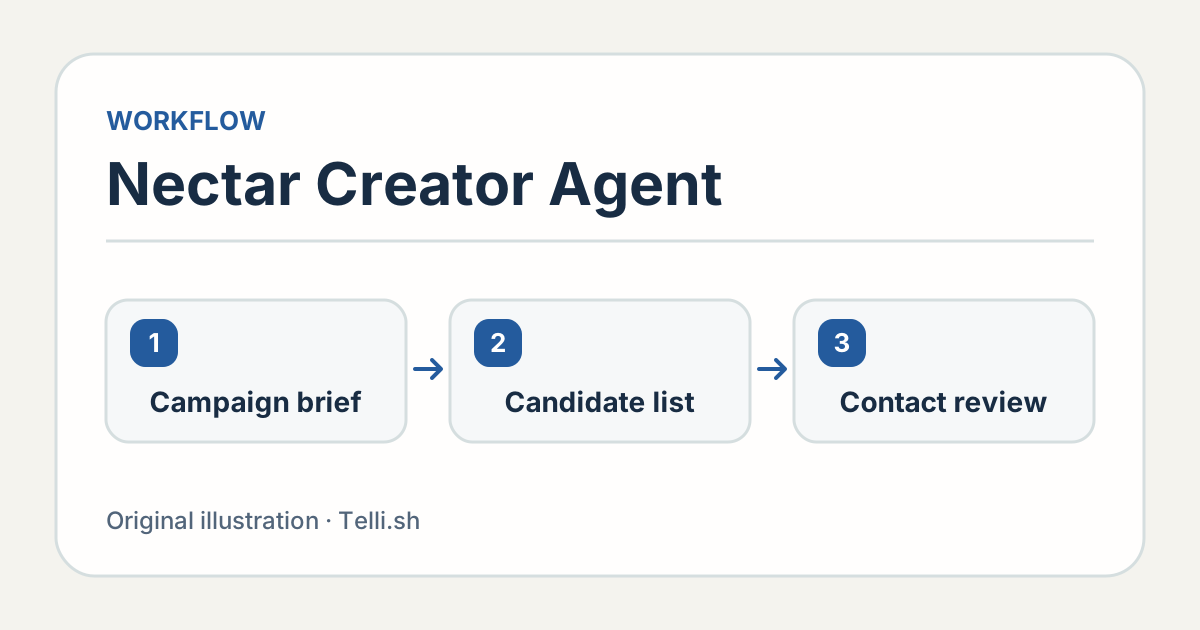
Ask for evidence alongside every recommendation so a person can review the shortlist quickly. Original illustration by Telli.sh.
A useful candidate entry should tell the team which specific videos support the match. It can note that a recipe uses a small countertop and that the creator includes substitution tips that fit the campaign. It can also flag an open question, such as whether a competing cookware partnership is current. That gives the reviewer a reason to click a source and a question to resolve before the outreach moves forward.
Ranking and brand fit need a second look
Nectar says Creator Agent analyzes video content and evaluates brand suitability in context. That approach matters when the meaning of a post changes with the surrounding conversation. A brand name may appear because a creator reviewed it, criticized it or tagged a paid sponsor. A keyword match would see all three. An interpretation based on the full post can provide more context, but the team should be able to verify that interpretation before treating it as a fact. Nectar's November 12 release
For the cookware brand, compare the top ten results against the original criteria. Check a small sample from lower in the list, too. A newer creator may score modestly because there is less historical information, yet still make the most useful videos for the campaign. If every result is a large account, ask whether the initial criteria accidentally favored follower count over format, audience and ability to show the product naturally.
The team can make the review faster by using three decisions. Accept a candidate when the evidence supports the match. Mark the candidate for clarification when a partnership or audience detail is uncertain. Set the candidate aside when there is a clear mismatch. Save a short reason in each case. The labels are useful because the next search can use the evidence behind them, and a colleague can see why a name was never contacted.
| Shortlist check | Question to ask | Evidence to record |
|---|---|---|
| Fit | Does the creator already publish the kind of work the campaign needs? | A specific post and what it demonstrates |
| Audience | Can the campaign serve the creator's relevant audience? | Supported language, market or delivery constraints |
| Conflict | Does a recent or existing agreement require clarification? | Date, brand and whether the post was sponsored if known |
| Evidence gap | Is the recommendation based on a small or old sample? | What the reviewer could see and what remains uncertain |
Avoid turning a “brand fit” label into a personal judgment. The relevant question is whether the campaign and the creator's work fit each other now. A team can avoid using personal milestones or sensitive details as outreach hooks, even when a tool surfaces them. A thoughtful explanation of why the person's published work fits the project usually gives the creator more useful information than a message assembled around their private life.
A draft and a sent message are different decisions
Nectar describes personalized outreach and direct messages as part of Creator Agent, with related functions for landing pages, contacts, contracts and gifting. Its public walkthrough shows a batch of drafts waiting for approval. Check that behavior for the specific workspace and channel before enabling automatic actions. A first send should have a clear owner whenever a tool can speak with the brand's identity. Nectar Creator Agent product page · Nectar's November 12 release
For the example campaign, the first message can be simple. Acknowledge a specific public video, explain the proposed collaboration and give enough information for the creator to decide whether to reply. If pay or usage rights are already set, include the accurate terms that the brand has approved. If the terms are still open, say that a brief and budget can be discussed. An enthusiastic message should never invent an offer because it sounds more likely to receive a response.
Have the reviewer confirm the recipient, account and actual text. A creator with a similar name may work with the same agency or appear in another person's video. A brand may operate several regional accounts. A mismatch can waste the time the ranking saved and can make the message appear suspicious. An approval record is helpful when it captures the exact draft and recipient instead of merely saying that the campaign was approved in general.
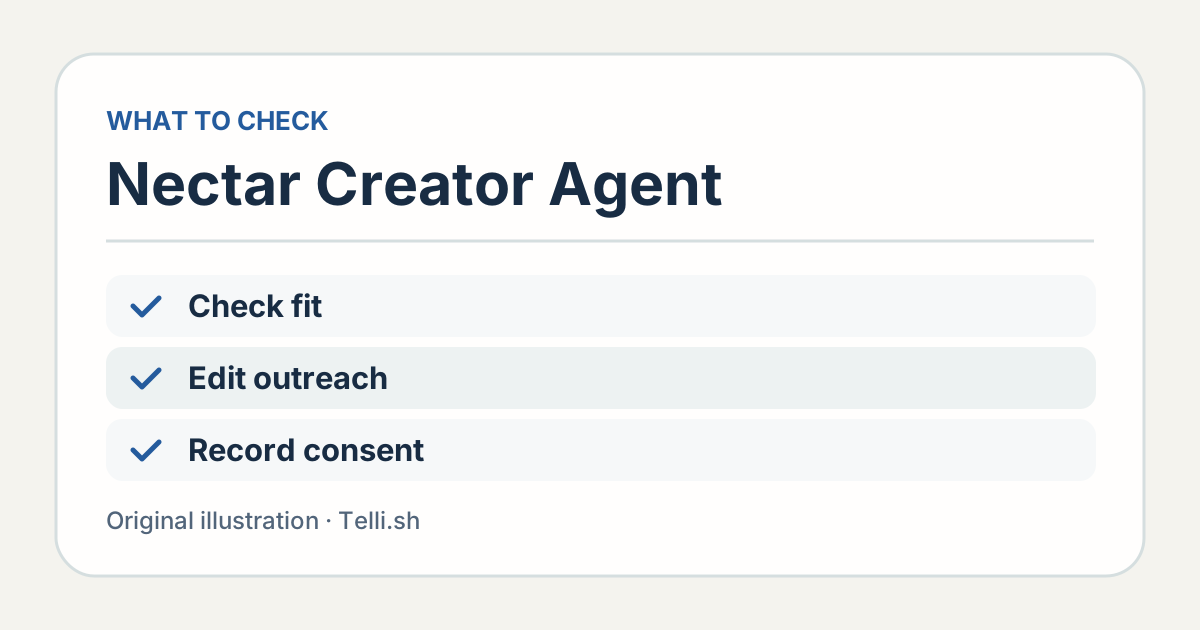
Review the message and its destination before a brand account sends it. Original illustration by Telli.sh.
Another check belongs after sending. Can the team see who was contacted and by which channel? Does a reply reach a person who can negotiate or answer questions? If someone asks not to receive further outreach, can the team record that preference and ensure it applies to the next campaign? These are practical checks for any workflow that combines discovery with outbound communication.
Campaign reporting needs a definition everyone uses
Nectar's release describes reporting estimated earned media value by creator and post. That gives teams a way to compare the activity that appears in one view, including posts they might otherwise miss. Earned media value is an estimate. It is worth keeping it separate from sales, cash costs and agreed deliverables so the numbers do not acquire a meaning the metric cannot support. Nectar's November 12 release
For a first test, consider tracking time to a verified shortlist and reply rate separately. The first number reflects the work of finding people worth considering. The second can change with subject, timing, terms, audience and how personally the offer is written. Keep the total number of approved contacts and the number of replies so the team can see the difference between a small sample and a larger change.
Another useful measure is the number of messages a reviewer rewrote substantially. If most need work because the drafts misstate what a creator posts, the evidence step needs attention. If the evidence is good but the tone is repetitive, refine the brief and give the reviewer a clearer example of a good opening. A team's editing patterns can explain why contact quality did or did not improve, even when the headline response number moves little.
Track sales and attribution on their own terms. If the campaign uses creator codes, count how many can be connected to orders through your approved reporting process. A post can help someone learn about the brand without immediately generating an attributed sale. Decide which part of the campaign each metric is meant to show before drawing conclusions about the agent.
For example, a cookware team might approve six prospects, receive three replies and agree on two videos. If one video arrives after the reporting window, the marketing team should distinguish the completed collaboration from the published post. The reply count reflects contact, the agreement count reflects negotiation and the view count reflects publication. Keeping these stages distinct lets a team see whether faster discovery helped it find more suitable collaborators or simply moved the bottleneck to brief approval.
The same reporting can show where automation introduced duplicate work. A creator who already replied to a colleague through email should not receive another introductory direct message because the record only shows activity inside one platform. Mark prior contacts during the pilot and decide where the shared contact record lives.
Try the workflow on one small campaign first
- Write a one-page brief. Include an audience, three examples of relevant content, minimum criteria, common false matches and the person who can approve a first message.
- Request a shortlist with links to posts and open questions. Use the public product demonstration or an eligible Nectar workspace to confirm which evidence is visible to reviewers. Compare a sample against a small manual list.
- Ask for a few contact drafts. Verify each profile, previous brand contact, text, terms and sending account. Keep a human review step before the first messages and treat a follow-up as a separate decision.
- Review the time to a credible shortlist, how often recommendations needed correction and how much editing the messages required. Save the approved contact and its outcome with consistent reporting fields.
- Expand only the steps whose results make sense. Some campaigns may benefit most from search and review while maintaining manual contact. Others may save time with shared records for shipping and agreed deliverables.
Nectar says Creator Agent is an additional component for its customers and describes access through its Model Context Protocol integration as a future step in the launch release. If external assistant access matters to your workflow, confirm it for the exact Creator Agent functions you plan to use before building around it. Nectar's November 12 release
The useful outcome is a shortlist that another team member can defend and a message that makes sense to the person receiving it. If the agent can shorten that path while leaving the relationship in the team's hands, it has earned a role in the next campaign.
Sources
- Nectar's Creator Agent launch statement, November 12, 2026, distributed by Business Wire
- Nectar's public product page and illustrated discovery workflow
To keep campaign briefs and review decisions together, create a Telli.sh account.