Google's live speech translation shows why multilingual meetings still need reviewable notes
Google is pushing live speech translation into Meet and Translate. Telli.sh focuses on the part live translation can miss: a reviewable record of what was said.
Google's latest live translation work makes the direction of multilingual communication clear: translation is moving closer to the conversation itself.
At Google I/O 2025, Google described speech translation in Google Meet as a near real-time feature that can maintain the quality, tone, and expressiveness of a speaker's voice. Google Workspace later described the Meet beta as initially available for English and Spanish, with more languages planned. Google Translate is also moving live translation into headphones, turning ordinary listening hardware into a real-time translation surface.
The important shift is not only that translation is getting better. It is that translation is becoming ambient, live, and tied to the tools people already use while speaking.
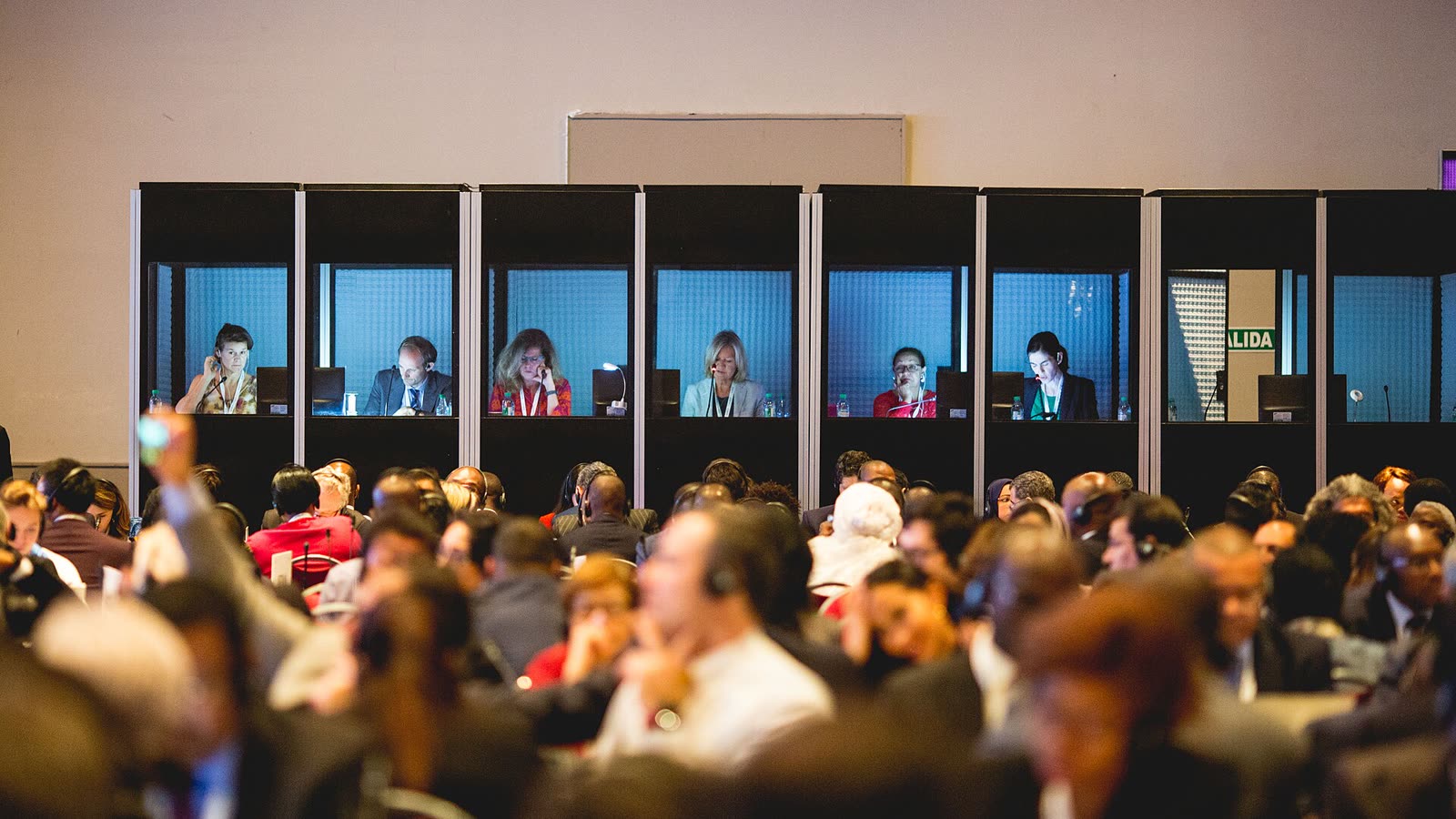
Image: "Heads of Delegation meeting, 11 December" by World Trade Organization, licensed under CC BY-SA 2.0, via Wikimedia Commons.
.jpg)
Live translation solves the moment
The most obvious value of live speech translation is immediacy. If one person speaks English and another person prefers Spanish, Korean, Japanese, Vietnamese, Thai, or another language, the barrier should not force the meeting to slow down.
That is the promise behind real-time translation in meetings, headphones, and future devices. The user should not need to copy text, wait for a transcript, or move the conversation into a separate translation tool. The translation should arrive while the conversation is still alive.
For travel, customer support, family calls, classroom access, global teams, and cross-border sales, this is a major product direction. It also sets a higher expectation for every multilingual communication tool: translation cannot feel like an afterthought.
Work conversations need memory, not only translation
But meetings have a second problem.
After the conversation ends, people still need to know what happened.
They need the source transcript. They need decisions. They need action items. They need the context behind a summary. They need to verify whether a translated phrase changed the meaning, whether a decision was actually agreed, or whether a follow-up belongs to one person or the whole team.
Live translation helps people understand each other in the moment. A reviewable note helps people trust and reuse the conversation after the moment has passed.
That difference matters for real work. A live translated sentence can disappear as soon as the call moves on. A transcript and note can become the shared record.
The layer that outlasts the conversation
Live translation and a reviewable record are not competing ideas; they solve different halves of the same problem, and the durable half is the one that is easy to under-invest in. The source transcript, the decisions, the action items, and the context behind a summary are what let a team trust and reuse a conversation once the call has moved on.
Both layers benefit when the record forms while the session is still happening. If the first visible result only appears after the meeting, trust drops. If the transcript streams as people speak, they can catch a mistaken translation or a lost decision early, while the context is still fresh.
The next natural step is live voice handoff: a speaker talking in their own language while the other person hears it in near real time, with the meeting record still preserved underneath. Google's work in live speech translation makes that future feel much closer than it did a few years ago — and it raises the bar for keeping a dependable trail of what was actually said.
Keeping that trail is where Telli.sh focuses: live recording, transcription, multilingual notes, and summaries that stay connected to the source. If a reviewable record is the part your multilingual meetings keep losing, you can start there.